Buyer guide / commercial terms
Commercial template licenses: perpetual, maintenance, clients, and source
Understand perpetual source licenses, maintenance renewals, project and client limits, redistribution, updates, and the questions to ask before buying a web template.
- 01
Perpetual normally describes your right to keep using a licensed version; it does not automatically promise perpetual updates or support.
- 02
Maintenance is valuable only when its renewal interval, price, included work, cancellation, and post-expiry rights are explicit.
- 03
Project, client, seat, source-sharing, and redistribution rules can matter more than the headline price.
A license buys permission, not ownership of the underlying product
Buying source code feels tangible, so license language can be easy to ignore. You receive files you can edit, but the seller usually retains copyright in the template while granting specific rights to use it in an end product. The important questions are therefore not “do I get the source?” and “can I use it commercially?” Both answers are often yes. The useful questions define where, how often, for whom, and what you may redistribute.
A commercial end product is usually the website or application you build with the template. Selling access to that end product can be permitted while reselling the template source is prohibited. Client work may be permitted for one client, multiple clients, or only under a higher tier. Team members may be allowed to work with the source while sharing it publicly, packaging it into another template, or transferring it outside the licensed project remains forbidden.
This guide explains common structures, not legal advice. The seller’s actual license controls. If your business model involves redistribution, white-label resale, site generation for many customers, or embedding source into a product customers can export, ask the seller in writing before purchase.
Perpetual and maintained are different promises
A clear offer separates version rights from ongoing work. Neither model is automatically better.
| Option | You keep | Ongoing work | Payment behavior |
|---|---|---|---|
| Perpetual version license | The licensed version and the commercial rights stated for it | No future compatibility, new features, or support unless separately promised | One payment with no automatic renewal |
| License with maintenance | The source and the rights stated for the acquired version, including post-expiry rights defined by the seller | Compatibility maintenance or updates during the active term | Lower or bundled initial price with a disclosed recurring renewal interval and amount |
| Subscription-only access | Only the rights explicitly surviving cancellation | Updates or hosted access while subscribed | Recurring payment; continued use may depend on active status |
Read these clauses before the price
A lower headline price can be the wrong economic choice when the license does not match how your team delivers work.
- 01
End-product limit
Check whether the license covers one website, one application, one client, one organization, or an unlimited project tier.
- 02
Client transfer
Confirm whether you can deliver the adapted source to a client and whether the client inherits restrictions or needs a separate license.
- 03
Seats and contractors
Know who may access the unmodified source: employees, contractors, agencies, and external collaborators may be treated differently.
- 04
Redistribution
Templates normally prohibit reselling, sublicensing, publishing, or including substantially reusable source in another template or builder export.
- 05
Renewal mechanics
Look for the first renewal date, amount, tax treatment, interval, cancellation method, notice rules, and what happens after cancellation.
- 06
Update scope
Compatibility maintenance is not the same as new features, redesigns, custom integration, or guaranteed framework-major migrations.
Separate the four commercial layers
Confusion drops when the offer states each layer independently instead of hiding everything behind “lifetime.”
- 01Source access
Which files and versions can be downloaded, and whether access to old downloads survives cancellation.
- 02Usage rights
Which projects, clients, team members, and commercial end products the license permits.
- 03Maintenance
Which compatibility fixes or updates are delivered, during which term, and under which technical scope.
- 04Support
Which questions or defects receive seller help, through which channel, and whether custom implementation is excluded.
Stunform states version ownership and maintenance separately
ORA perpetual licenses are one-time rights for the purchased source version. Maintained licenses start lower, include twelve months of compatibility maintenance, and renew at the amount shown before checkout. The commercial page remains the controlling product description; review the included license before redistribution or multi-client use.
Review ORA bundle licensing and prices ↗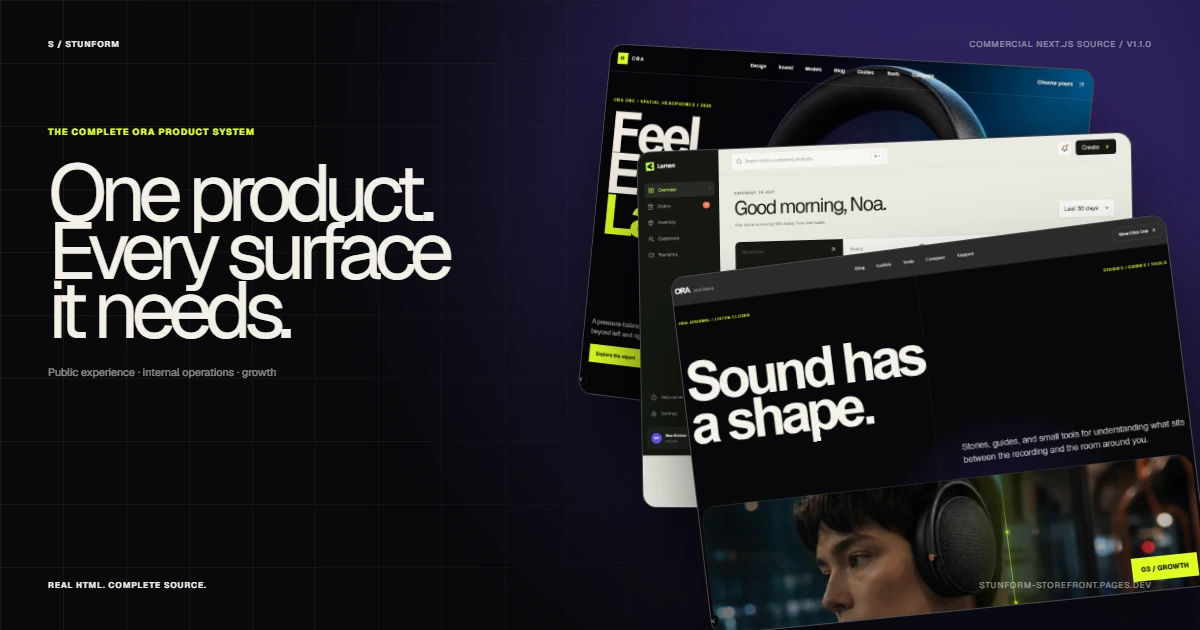
Maintenance should reduce uncertainty, not manufacture it
A useful maintenance plan answers a practical concern: framework and browser ecosystems move, and a buyer may prefer predictable compatibility work to owning every upgrade immediately. The offer becomes manipulative when cancellation threatens rights that were presented as owned, renewal pricing is hidden, or “lifetime updates” has no defined lifetime, cadence, or scope.
Evaluate maintenance against your deployment horizon. A short-lived campaign may need no renewal. A product expected to evolve for several years may benefit from compatibility work, but only if the seller maintains the stack you use and the renewal cost is lower than your expected internal effort. Multi-year discounts should not pressure you into buying time beyond your credible roadmap.
Keep the license file, invoice, product description, and maintenance terms from the purchase date. If a marketplace and the original seller describe rights differently, clarify which terms control before deploying. Clear records are low-maintenance insurance for both buyer and seller.